
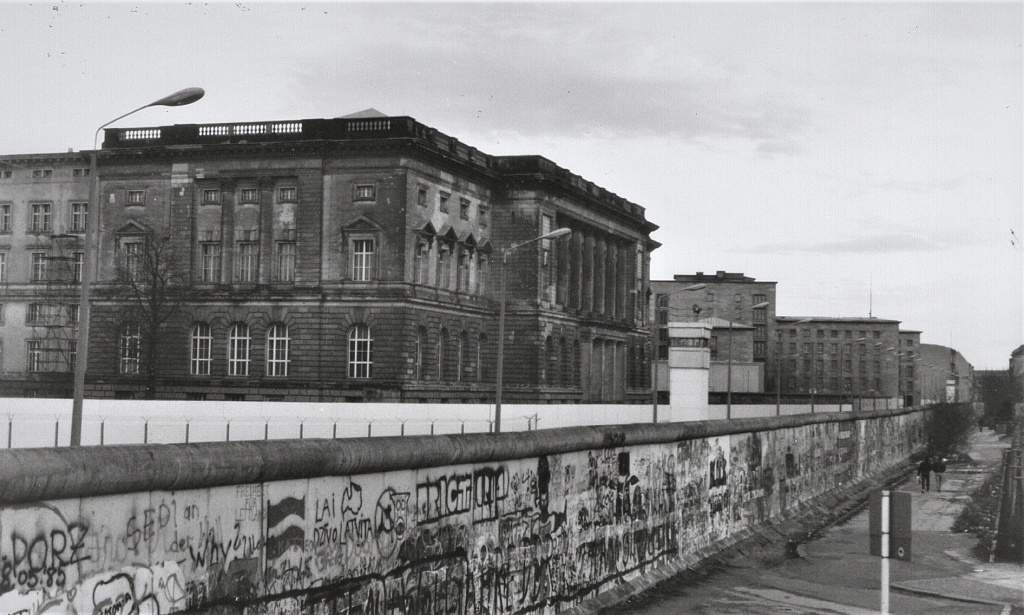

Feature image: The Berlin Wall. Credit: Library of Congress.
When the black, red, and gold flag went up in front of the Berlin Reichstag on Oct. 3, 1990, German reunification became official. Oct. 3 marks Tag der Deutschen Einheit (German Unity Day) and 36 years since the two parts of Germany merged. Yet, nearly four decades after East Germany dissolved, the border that once divided us has not completely disappeared.
Before the Wall Came Down
I was nine years old when the Wall came down in November 1989. I vividly remember watching TV on Sept. 30, 1989, as Hans-Dietrich Genscher stood on the balcony of the West German Embassy in Prague to announce that East German refugees could travel West. That same day, my family debated leaving, too. But we stayed, marched in peaceful Monday demonstrations, and chanted Wir sind das Volk (We are the People).
Life in East Germany had a predictable, grounded rhythm. My parents had steady work, and through their employers, we had access to month-long summer camps and vacation spots. Surrounding it all was an incredible community. My grandparents navigated constant system shortages through an inventive barter network — trading car repairs for dental work or home-sewn clothes for apple juice — proving that people built warmth, ingenuity, and independence despite strict limitations.
The World That Shifted Overnight
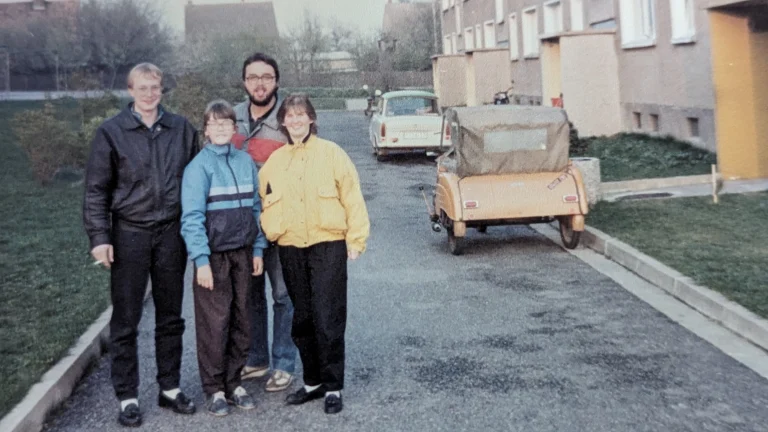
When official unification arrived on Oct. 3, 1990, that familiar world didn’t just change: it vanished. My sister was about to graduate, with an assigned path forward already waiting for her. Overnight, that path no longer existed and was replaced with choices that felt foreign and unpredictable.
Capable parents and craftsmen were suddenly tasked with navigating brand-new insurance systems, Western banking, and an economy that treated their education and decades of hard work as less-than. Investors and bureaucrats took on the impossible responsibility to privatize state-owned businesses. In my small 800-person village alone, we had three textile factories. Not a single one survived privatization.
My uncle had operated large-scale sewing machines in the textile industry his whole life. After 1990, he was retrained to install refrigerators in newly built hotels, then sent out to lay telecommunications cables across the country for the infrastructure boom. Once that initial rush slowed down, he was retrained yet again — that time as a florist, which was short-lived. Many new professions popped up and disappeared just as fast. His story wasn’t unique by far. It was the daily reality of an entire generation forced to constantly discard their past and reinvent themselves just to keep a footing in a new world.
Overwritten History and Quiet Pride
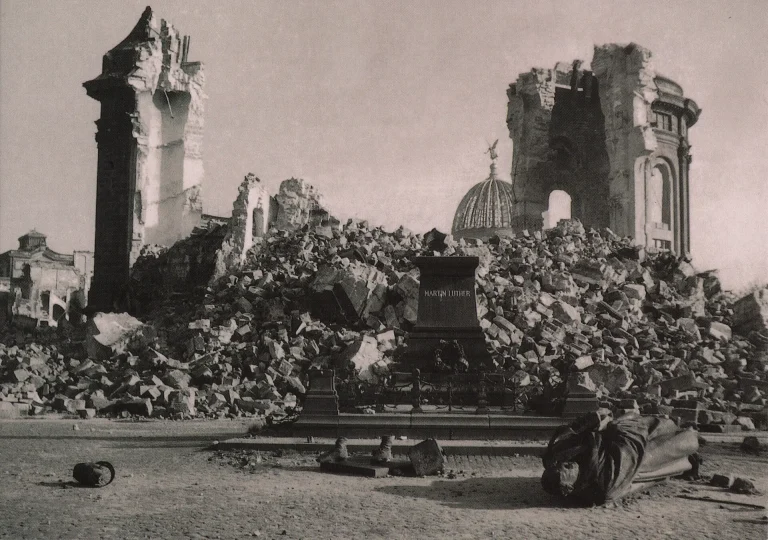
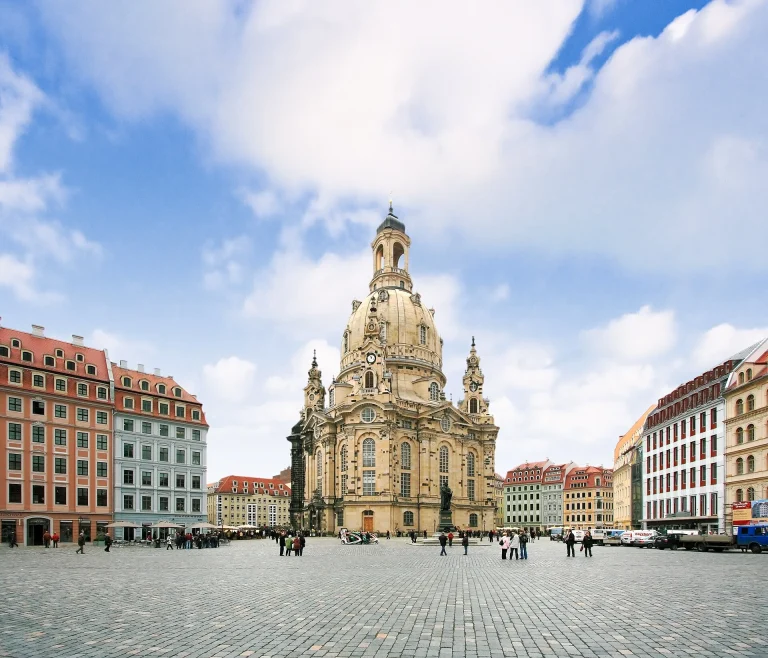
The physical makeover of our rural Saxon Heimat was just as abrupt. While nearby cities like Dresden spent decades painstakingly restoring pre-WWII architecture that had sat in ruins since the war to serve as silent memorials and anti-Western propaganda, rural modernization didn’t look back. It overwrote our local history within a few years. Bright exterior paint, billboards, and colorful storefronts arrived almost instantly, along with traffic lights and layers of new asphalt to cover decade-old potholes. Our local Gasthof (community hall and restaurant), where my parents met at a dance over 50 years ago, and where my sister and I celebrated our Jugendweihe (coming-of-age ceremony) and Schulanfang (first day of school celebration), was deemed unsafe and couldn’t be preserved. It was torn down and replaced with a bank.
Living in Indiana today, where communities take genuine pride in preserving historic brickwork and local landmarks, I am deeply thankful for these preservation efforts. Whenever I come across the architectural walking tours highlighting German influence in downtown Indianapolis or read the historic plaques on buildings throughout Zionsville, I am reminded of how precious that sense of continuity is — and how jarring it felt in East Germany when local history was so quickly overwritten in the rush to assimilate.
In the middle of all that rapid change, a quiet pride remained. What Germans call Ostalgie was never about wishing for state surveillance or food rations to come back. Ostalgie is a clever wordplay of Ost (East) and Nostalgie (nostalgia). It is a self-preservation mechanism — a way of asserting that our hard work, our childhood memories, and the human dignity of the lives we lived actually mattered. A handful of brands survived or reemerged later on; that specific taste or particular smell brought back a flood of genuine comfort and belonging.
Listening Across the Divide
Navigating the lingering differences between East and West remains an ongoing reality. Many in the West supported unification with genuine goodwill and by investing billions to rebuild. From that perspective, lingering friction can easily look like ungrateful complaining. But from the Eastern side, that narrative overlooks the human equation: millions watching their industries disappear overnight, feeling like second-class citizens (Bürger zweiter Klasse), and watching wave after wave of young people leave to build their futures elsewhere.
When East Germans meet today, even half a world away in Indiana, there is an immediate, unspoken bond. We don’t have to translate our complex history to one another. The gratitude, the guilt, and the sense of loss are already understood, shaping how we navigate both our past and our present.
Here in Indiana, October brings official German Heritage Month, with Oct. 6 marking German-American Day across the country. While celebrations usually mean Oktoberfest, beer gardens, and brass bands, true heritage demands that we honor the complex, human stories beneath the surface. As Hoosiers head into local election season and engage in community debates, reunification offers an urgent lesson: real unity is never built by ignoring where someone comes from, dismissing their experiences, or erasing their story. Whether in Germany or across our own Indiana towns, genuine connection begins when we sit down and listen to one another with open doors and mutual respect.
Upcoming German Heritage Events in October
Oct. 14 – IGHS Stammtisch in Indianapolis: Monthly gathering; this month at the Kurt Vonnegut Museum to discuss history, culture, and Dresden.
Oct. 17 – Paco Erhard Comedy at The Cat in Carmel: Sharp, self-aware stand-up comedy exploring German quirks, stereotypes, and modern European life.
Oct. 26 – Carmel Seiffen Sister Cities Stammtisch at Bier Brewery Carmel: Casual meetup to practice German, celebrating Carmel’s connection to Saxony’s Ore Mountains.

Columnist Sandi Richardson is a nonprofit leader, project manager and president of Carmel Seiffen Sister Cities Inc., where she directs cultural exchange initiatives. A native of Saxony, Germany, now living in Indiana, Richardson brings a rich background in cultural programming, language education and storytelling to her writing—including her previous work shaping the cultural authenticity for the award-winning Carmel Christkindlmarkt. Her column explores community, heritage and the meaningful cultural threads that connect our local neighborhoods to the wider world.
Contact Sandi Richardson:
Heimat Link LLC
Email: heimat2link@gmail.com
Website: heimatlink.com (coming soon)
LinkedIn: linkedin.com/in/sandrawrich