I recently watched a social media video made by an energetic influencer saying, “You’ll never have to buy basil again!” The post was built around an appealing idea: buy one healthy basil plant and use it to create more basil plants through cuttings.
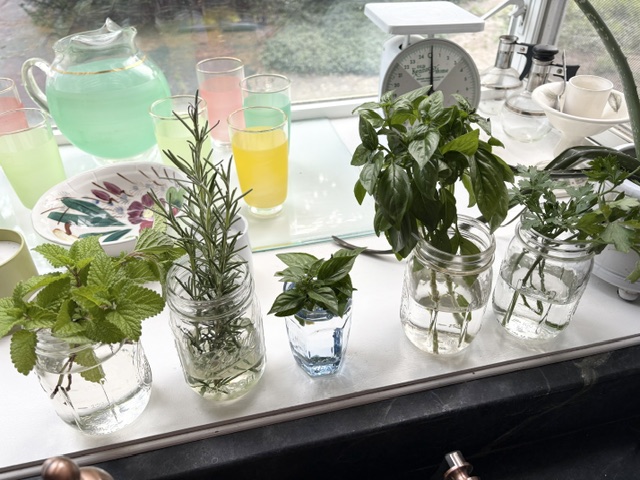
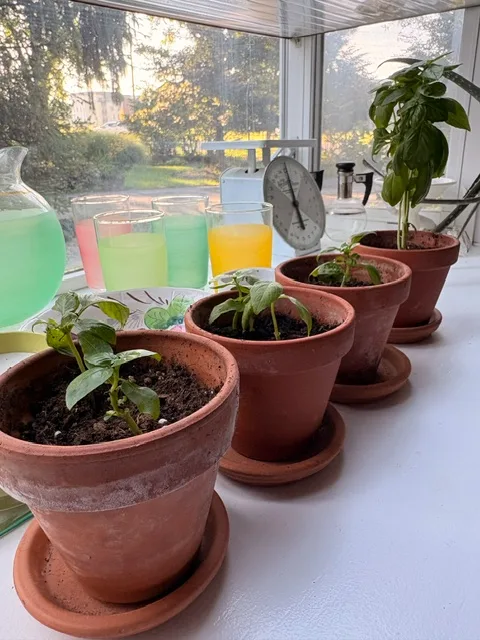
Start your plant propagation journey with friendly basil. (Photo submitted)
Basil teaches the pattern
I have propagated herbs before, and that enthusiastic video made me want to explain the process in a little more detail. Basil is a great gateway plant because it belongs to the mint family, a group of herbs with shared traits that make many of them easy to propagate, prune, and understand.
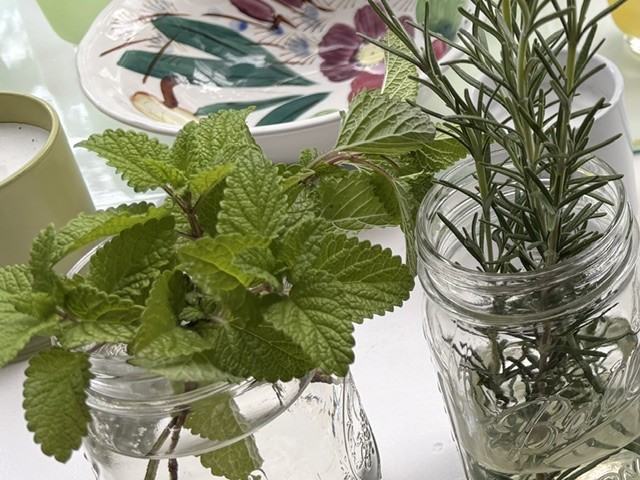
That family relationship matters because once you understand how basil grows from nodes, you can better understand related herbs such as lemon balm, catnip, and rosemary. The method changes depending on the plant’s stem texture and growth habit: soft-stemmed herbs are generally easier to root in water, while woody herbs need more care.
Quick guide: Which herbs to root in water
Think of basil as the teaching plant. It lets you see a basic pattern in action: roots can form from a cut stem, and new growth can wake from nodes after pruning. The plant is always deciding where to send its energy — down into roots, up into leaves, outward into branches, or finally into bloom.
Lemon balm and catnip have relatively soft stems and usually root easily from cuttings. Rosemary belongs to the same family, but it behaves differently because its stems are woody and adapted to drier conditions. Rosemary can be propagated, but it is usually more reliable in soil than in water. For best results, take a soft, green rosemary cutting, remove the lower leaves, dip the cut end in rooting hormone if you have it, and place it in a small pot of moist but well-draining soil.
The main takeaway: if you learn to read basil, you can start to read many of its relatives, too — and with them, the quiet routes energy takes through a plant.
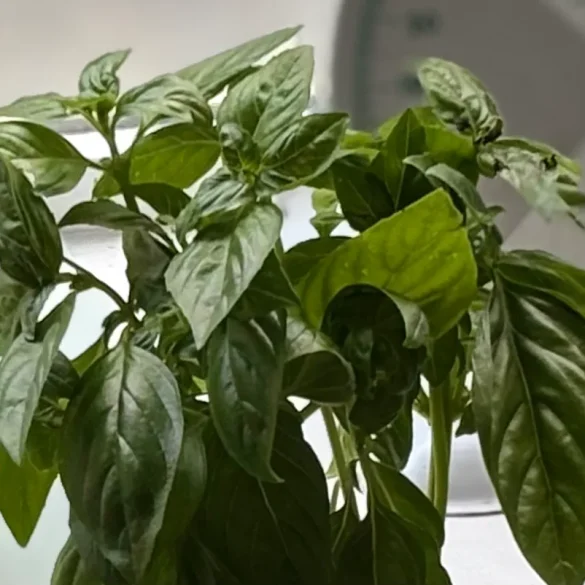
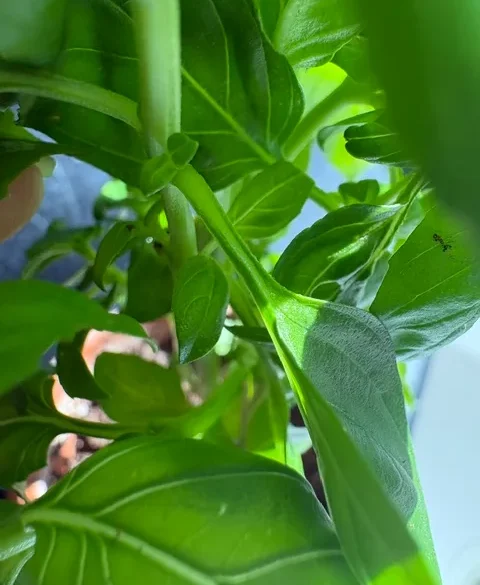
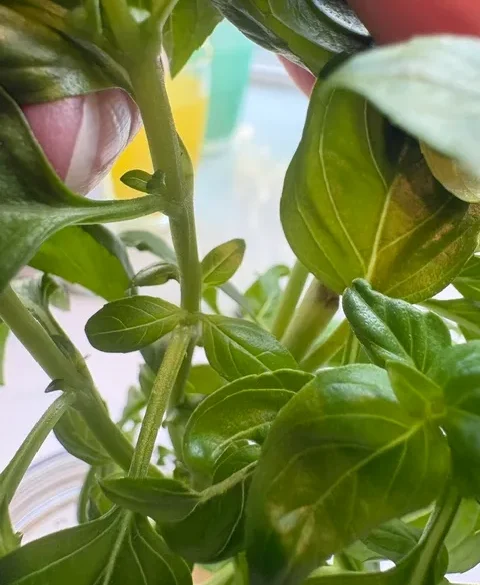
Finding a node, the place where two leaves grow opposite of each other, is the key to propagating and pruning members of the mint family. (Photo submitted)
How to root, prune, and use basil
Starting your plant propagation journey with basil is ideal because it roots quickly and makes progress visible. Choose a healthy, non-flowering stem that is 4 to 6 inches long. Cut just below a node — the point where leaves attach to the stem — strip the lower leaves, and place the cutting in clear water. A node is a hinge of possibility: a charged little crossroads where the plant’s green current can become leaf, branch, or root.
Set the glass in bright, indirect light and change the water every few days. When the roots are about 2 inches long, transplant the cutting into potting mix. Keep the soil evenly moist for the first week while the plant gathers itself and turns its new energy toward home.
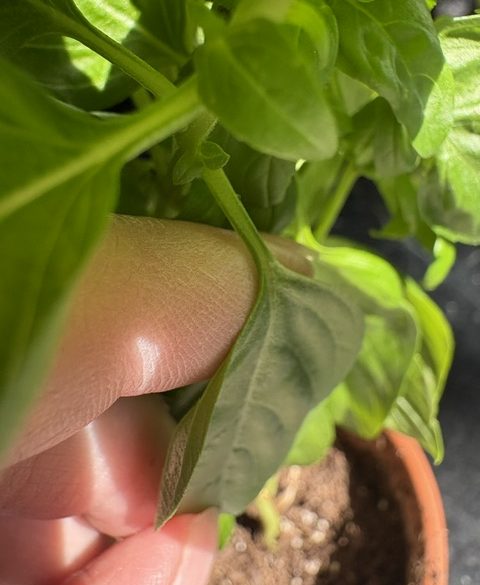
When pruning, snip the leaf above the node to allow these two leaves the energy to grow stronger and more full of life. (Photo submitted)
For pruning, the cut goes in a different place: just above a node. Look for 2 healthy leaves growing opposite each other, then cut the stem just above that point. Removing the growing tip changes the plant’s instructions. Instead of pouring energy up one tall stem, basil gathers that green charge at the node and sends it sideways into small buds, growing bushier instead of lanky.
Once a basil plant has several sets of leaves, harvest small sections of stem rather than plucking individual leaves indefinitely. You get basil for the kitchen and keep the plant sending energy into fresh branching.
When basil bolts, it turns its current from leafy growth toward flower and seed. The signs are easy to spot: the center stem stretches upward, the leaves near the tip get smaller, and a pointed flower spike begins to form. If your goal is a long culinary harvest, prune the flowering stem back to a healthy node instead of snipping only the tiny flower tip.
That said, flowering basil is not a failure. Basil flowers attract pollinators, and the flowers and flowering tips are edible. Use them as a garnish, steep them for tea, or let one healthy plant mature if you want to try saving seed for next year.
A practical compromise is to divide your basil into jobs: keep most plants pinched and leafy for cooking and let 1 or 2 spend their energy on flowers for pollinators, edible blossoms, or seed.
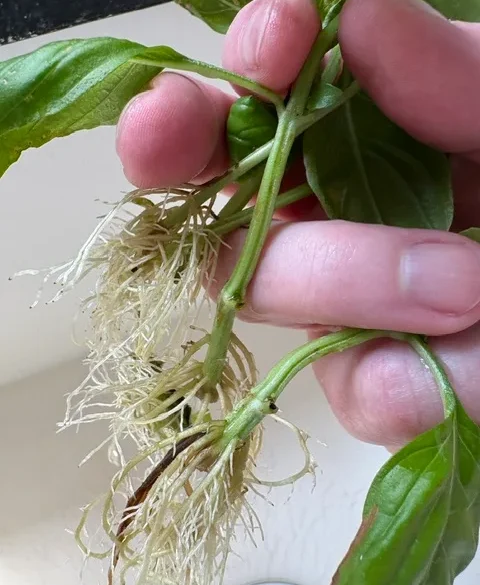
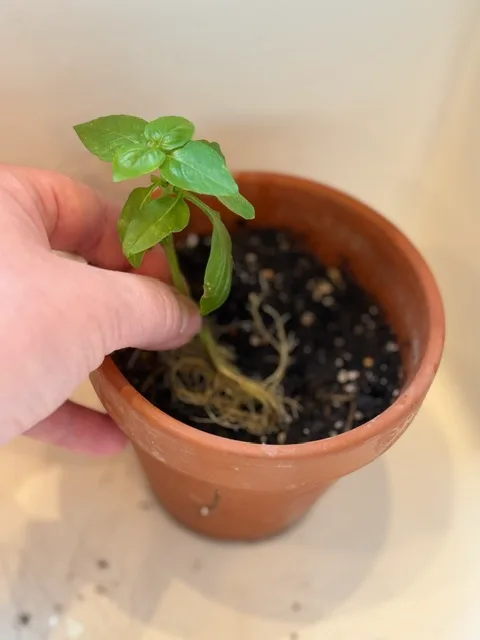
If creating new plants is your goal, cut below the node made up of two oppositely growing leaves, strip the leaves, and place in water so that energy will be directed down to make new roots. (Photo submitted)
What basil’s relatives have in common
Lemon balm is another mint-family herb that roots readily from cuttings. It shares basil’s square stems, opposite leaves, and tendency to branch after pruning. Its energy moves outward more quickly once planted outdoors, so it is best grown in a container or where spreading is welcome. The leaves can be used in water, tea, salads, and simple syrups.
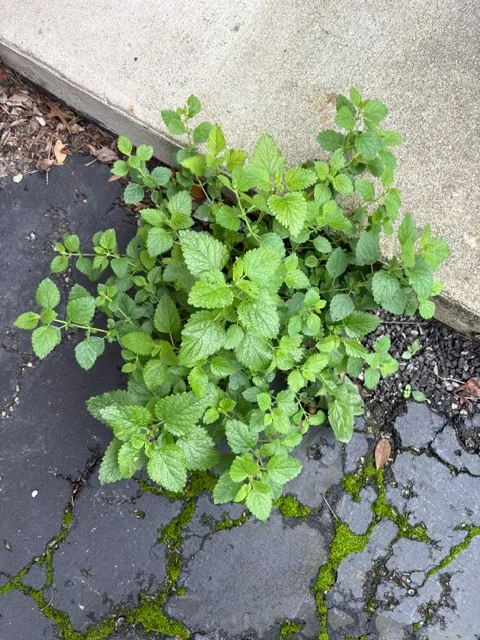
A core memory of my childhood is my mother snipping lemon balm from her yard and putting it directly into a glass of ice water for a refreshing summer drink. But a word of caution about growing lemon balm: like many in the mint family, lemon balm will spread by roots and make itself at home. Everywhere. If it bolts and goes to seed, those seeds can spread, too. Evidence of this is in my mother’s volunteer lemon balm bush growing from a crack in her driveway.
The mint family will grow everywhere and anywhere; this lemon balm sprouted in my mother‘s driveway! (Photo submitted)
Catnip also belongs to the mint family and can be propagated in similar ways. It roots easily from soft cuttings, can be divided, and can also grow from seed.
Catnip can spread by growth and by seed, but when it bolts, it also produces beautiful purple flowers that pollinators love. You might have seen it in someone’s landscaping — I know I have seen it as ground cover in many roundabouts. Even though any member of the mint family can take over a landscape bed, I let my catnip go so that my bees have a feast in the spring and summer.
This is where the connection between roots and pruning becomes useful. Propagation encourages energy downward into new roots; pruning redirects it outward into new growth. In both cases, the node is the key, the small place where the plant decides what comes next.
It is so satisfying to see root growth from basil in just a few short weeks!
Bottom line For an easy kitchen-garden propagation win, start with basil. Then use what it teaches you to understand lemon balm, catnip, rosemary, and the rest of the mint family: plants whose energy can be rooted, redirected, and shared.
For more simple foraging tips, tricks, and hacks for your own backyard pantry, follow Hillside Place Modern Homestead’s Simple Foraging page on Pinterest.
Guest Contributor
Tracy Barron is a retired nonprofit executive, proud Butler University alum, and self-proclaimed OG #CottageCore devotee. A Zionsville resident for 20 years, she coordinates the Zionsville Community Supported Agriculture (CSA) program, serves on the Arts Task Force for the Butler Arts & Events Center, and is a familiar face at Silent Book Club meetups. Follow Hillside Place Modern Homestead on Instagram, Pinterest and on Facebook.
Zionsville resident and columnist Tracy Barron. (Photo: submitted)